.png)
Did You Know? Thai Traditional Massage (Nuad Thai) is a UNESCO Cultural Heritage!
- Rei Thailand Massage
- Feb 1, 2025
- 2 min read
Updated: Jan 25
Did you know that Thai Traditional Massage, also known as Nuad Thai, is not just a relaxing experience, but also a celebrated cultural practice recognized by UNESCO? In 2019, this ancient healing art was officially added to the list of Intangible Cultural Heritage of Humanity.
Nuad Thai has developed over centuries as part of traditional Thai healthcare and community self‑care. According to Thai tradition, the practice is associated with Jivaka Kumar Bhaccha, a physician figure in Buddhist texts who is often honored as a symbolic founder of Thai medicine. Over time, Nuad Thai evolved into the form we know today, combining rhythmic pressure, assisted stretching, and traditional energy‑line concepts.
Thai massage incorporates several distinct techniques, including:
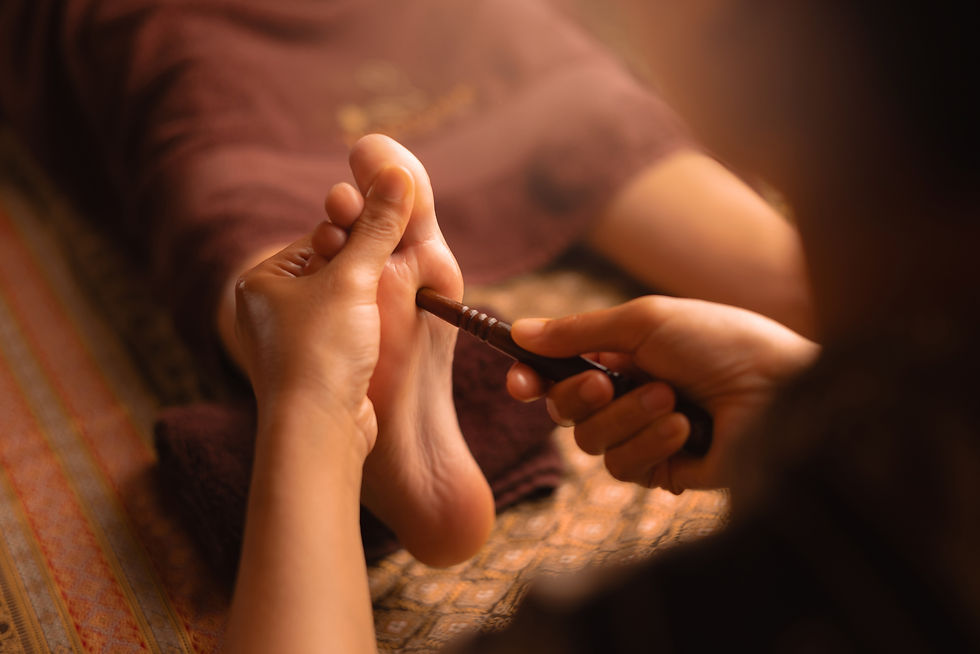
Acupressure: Applying pressure to specific points along the body's energy lines, similar to acupuncture, but using the hands, thumbs, elbows, and feet.
Stretching and Assisted Yoga Postures: The therapist helps the client move into different yoga-like positions to increase flexibility and promote relaxation.
Energy Line Therapy: Based on the belief that energy flows along certain pathways in the body, Thai massage aims to unblock and balance the energy flow, restoring harmony to the body and mind.
Thai massage is deeply rooted in Thai philosophy, where the body, mind, and spirit are interconnected. The therapeutic techniques used in Thai massage aim to restore balance, improve flexibility, and promote overall wellness.
Recognized by UNESCO for its cultural significance, Nuad Thai massage is more than just a way to relieve stress. It’s an essential part of Thailand’s identity and has been passed down through generations, preserving not only physical well-being but also the cultural heritage of the Thai people.
So, the next time you indulge in a Thai massage, remember – it’s not just about relaxation; you’re experiencing a living tradition that has been cherished for centuries!


Comments